Ask any restaurant owner what their single biggest revenue leak is and "no-shows" is in the top three. A reservation that does not arrive does not just cost you the meal that table would have served. It costs you the chance to serve a walk-in customer who saw your "fully booked" sign and went elsewhere. Industry research consistently puts the impact at five to twenty percent of nightly capacity for restaurants that take reservations, with the high end concentrated in popular dinner-only spots.
For decades the only countermeasures were soft. A confirmation phone call the day of. A polite reminder text. Maybe a credit card on file with a never-actually-charged cancellation fee. None of these dramatically moved the needle, partly because customers were rarely punished for breaking the implicit social contract of a reservation.
In 2026 a different approach is gaining traction. Instead of a traditional reservation, restaurants run a virtual queue that requires the customer to be physically near the restaurant before they can take a number. This shifts the entire incentive structure.
Why GPS Gating Solves the No-Show Problem
A traditional reservation is a promise made hours or days in advance. Plenty can change between then and the reservation time. Plans shift. The weather turns. Another opportunity comes up. The customer might genuinely intend to show, then forget. There is no immediate cost to skipping, so the no-show happens.
A GPS-gated queue inverts this. The customer cannot reserve until they are physically within a few kilometers of the restaurant. By definition, anyone with a number is already on their way. They have committed not just words but actual movement. The drop-off rate from "took a number" to "showed up" plummets, often into the single digits, because the cost of breaking the commitment has gone up substantially.
The trade-off is that this only works for restaurants where the dining room can absorb same-day demand without strict seating times. A multi-course tasting menu that requires perfectly synced kitchen timing still benefits from a traditional reservation. A casual dim sum hall, a popular ramen shop, a busy noodle bar, or a takeaway-heavy operation almost always benefits from switching to a queue.
Prepayment Without a Payment Processor
The other leverage point is prepayment. If the customer has already paid, the no-show stops being a financial loss. The traditional way to do this is to integrate a credit card processor, which sounds simple but in practice involves merchant accounts, monthly fees, chargeback risk, and a thirty-page contract.
Many small restaurants in Southeast Asia, Latin America, and increasingly elsewhere, have skipped the credit card processor entirely. Instead, the customer makes a direct bank transfer or e-wallet payment to the restaurant's account, takes a screenshot of the confirmation, and uploads it through the ordering system. The restaurant manually confirms the slip is valid before starting the order.
This sounds primitive. In practice it works extremely well. Bank-transfer fees are typically zero or near-zero, compared to two to four percent for credit card processing. There are no chargebacks because the money is already in the restaurant's account. The settlement is immediate, not T+2. And customers are familiar with the workflow because it is how they pay for everything else, from utility bills to online shopping.
The downsides are real but bounded. Manual slip confirmation takes staff time, perhaps ten to fifteen seconds per order. Accepting bad slips creates losses, but the rate is much lower than restaurants worry about, because the friction of producing a fake slip is high relative to the value of an individual order. And not every customer wants to do a bank transfer, so a credit card option, when available, can capture the rest of the market.
What Customer-Facing Adoption Looks Like
The risk with any new workflow is that customers find it confusing and walk away. The mitigation is simple language and a single clear action at every step.
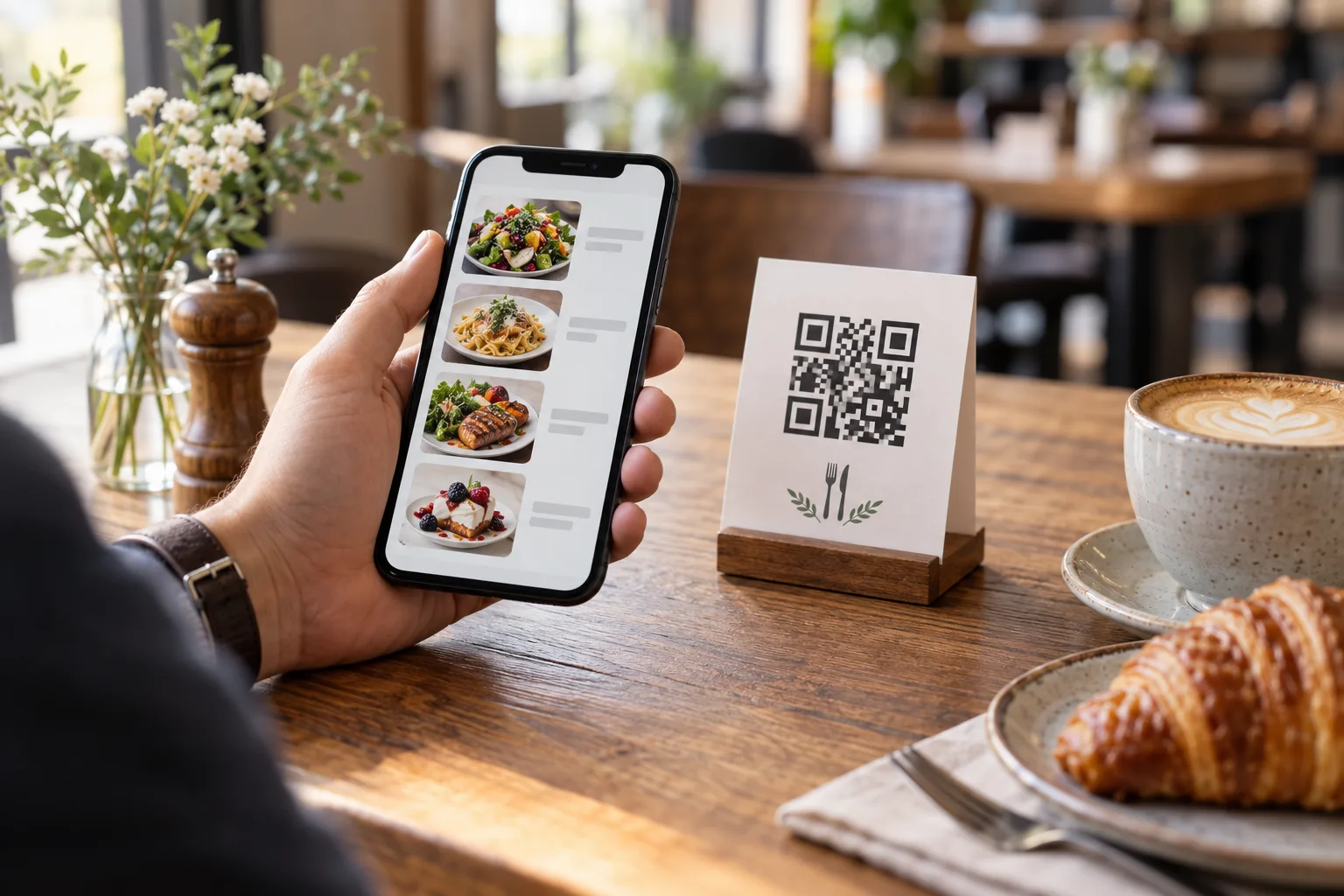
The customer arrives at the restaurant or sees its QR code online. They scan, see the queue page, and tap Reserve. They get back a queue number and a six-character reference code. If the restaurant requires prepayment, they see the total and an Upload payment slip button. They tap it, pick the screenshot from their phone, and the upload happens in the background. Their status badge updates to say "Waiting for restaurant to confirm payment" and they know the ball is no longer in their court.
The whole interaction takes under a minute. No app install, no account creation, no credit card form. The customer can save the queue page as an image and walk away knowing their spot is held.
For restaurants that have used this workflow for a while, the customer feedback has been strongly positive. The most common comment is some version of "I like that I do not have to call." The second most common is "I like that it works in my browser, I did not have to install anything."
Operational Realities
This workflow does not eliminate operational discipline. The host still needs to call numbers in order. The kitchen still needs to prepare orders accurately. Payment slips still need to be reviewed reasonably quickly, ideally within a few minutes of upload, so customers do not feel ignored.
What the workflow does is take the "did they show up" question off the table. By the time a customer has reserved a number, paid, and is standing at the door, they have committed enough that the no-show rate is essentially zero. The remaining operational work is what every restaurant has always done, executing well in real time.
What to Watch in 2026
Two trends are worth watching this year. First, more restaurants are setting their maximum-distance gating tighter, sometimes as low as five hundred meters, to ensure the customer is essentially at the door when they take a number. This works well in dense urban environments and makes the queue feel more "real time."
Second, more countries are seeing widespread adoption of national instant-payment networks (PromptPay in Thailand, PIX in Brazil, UPI in India, FedNow in the US). These networks make bank transfers as fast as credit card swipes but at near-zero cost. As they spread, the case for slip-based prepayment in restaurants gets stronger, not weaker, because the customer's side of the transaction is now genuinely instant.
If you are a restaurant operator weighing whether to invest in this workflow, the answer is increasingly clear. The infrastructure is cheap, the customer experience is good, and the no-show problem largely goes away. The only real cost is the few hours it takes to set up and the staff training to manage slip confirmations consistently. The payback period is typically a single dinner shift.