The shift from paper to digital menus has been building for years, but 2025 marks a tipping point. According to the National Restaurant Association's latest industry survey, 68 percent of full-service restaurants now offer some form of digital menu, up from just 18 percent in 2019. This is not a pandemic hangover. It is a structural change driven by economics, customer expectations, and operational reality.
The Real Cost of Paper Menus
Most restaurant owners underestimate what their paper menus actually cost. The sticker price of a print run is only the beginning. Consider the full lifecycle cost of a paper menu.
Design and layout work typically runs 200 to 500 dollars per revision, whether you use a freelance designer or a print shop's in-house service. Printing costs vary by material and quantity, but a mid-range restaurant spending 3 to 5 dollars per menu copy and replacing them quarterly spends 1,200 to 4,000 dollars per year on printing alone. Add rush printing for last-minute price changes or seasonal updates and the number climbs further.
Then there are the hidden costs. Staff time spent manually crossing out items or inserting paper clips with daily specials. The customer experience damage when a guest orders something from an outdated menu. The wasted food when a kitchen prepares a dish that should have been removed. Over a year, these soft costs often exceed the printing budget itself.
A digital menu eliminates all of these costs. The initial setup is typically free or very low cost, updates take minutes instead of weeks, and there are no per-unit printing expenses regardless of how many times you change your offerings.
Hygiene and Safety Considerations
While the acute pandemic fears have subsided, awareness of hygiene in shared spaces has permanently shifted. A 2024 consumer survey by Deloitte found that 54 percent of diners still prefer contactless menu options when available, not because they are afraid of illness but because they perceive it as more modern and cleaner.
Paper menus in a busy restaurant pass through dozens of hands per shift. Even with regular cleaning, they absorb moisture, food particles, and bacteria. Laminated menus are easier to sanitize but degrade quickly and feel unpleasant when worn. Digital menus on a guest's personal phone sidestep the issue entirely.
Real-Time Menu Management
The ability to update your menu in real time is arguably the most operationally valuable advantage of going digital. Consider the scenarios that every restaurant faces regularly.
You run out of a key ingredient at 7 PM on a Friday night. With a paper menu, servers verbally inform each table, some forget, orders come in for the unavailable item, the kitchen sends back a rejection, and the guest's experience suffers. With a digital menu, you mark the item as unavailable and it disappears or shows as sold out within seconds. No miscommunication, no disappointed customers.
Your food costs spike due to a supply chain disruption, and you need to adjust prices on ten items. Reprinting menus takes one to two weeks and costs hundreds of dollars. Updating a digital menu takes five minutes and costs nothing. This flexibility lets you protect margins without the lag that makes paper menus a liability during volatile markets.
Seasonal transitions become seamless. Instead of a hard cutover from your winter menu to your spring menu, you can gradually introduce new items, test them with real customers, and phase out underperformers. This iterative approach, impossible with printed menus, leads to stronger seasonal offerings over time.
Environmental Impact
The restaurant industry consumes an estimated 300 million paper menus per year in the United States alone. While paper is recyclable, most restaurant menus end up in general waste due to food contamination, lamination, or mixed material construction. Each menu represents trees harvested, water consumed in manufacturing, energy used in printing, and fuel burned in delivery.
Switching to digital menus is not going to save the planet on its own, but it is one of the easier environmental wins a restaurant can claim. For businesses that market sustainability as part of their brand, and a growing number do, eliminating paper menus is a visible, tangible step that resonates with environmentally conscious diners.
What Customers Actually Want
The generational divide in menu preferences is narrowing rapidly. While there was genuine resistance to QR code menus among older diners three years ago, familiarity has done its work. Today, the primary frustration customers report with digital menus is not the format itself but the execution: slow-loading pages, poor mobile layout, tiny text, and confusing navigation.
This is an important distinction. Diners are not rejecting digital menus. They are rejecting bad digital menus. A well-designed digital menu that loads quickly, presents information clearly, and works smoothly on any phone size is preferred by the majority of customers across all age groups.
Younger diners, those under 40, actively expect digital options. A 2025 survey by Toast found that 73 percent of millennial and Gen Z diners check a restaurant's online menu before deciding where to eat. If your digital presence is a blurry PDF of your paper menu, you are losing potential customers at the discovery stage.
The Multilingual Advantage
In an increasingly global dining landscape, the ability to serve customers in their preferred language is a competitive advantage. Cities like New York, London, Dubai, Bangkok, and Sydney host diners who speak dozens of languages daily.
Printing menus in even three languages triples your printing costs and makes each version harder to maintain. Digital menus with built-in translation capabilities, like those offered by GetFreeMenu, let diners switch languages with a single tap. Our menu translation guide covers how to do this well — which languages to start with and the mistakes to avoid. This is not just a convenience feature. For restaurants in tourist districts, it directly translates to higher order values because customers who understand the menu fully are more likely to order adventurously and add extras.
Operational Efficiency Gains
Digital menus integrate with other restaurant systems in ways paper never could. When connected to table ordering, a digital menu becomes the front end of your order management workflow. Guests browse, select, and submit orders without waiting for a server to take their order, which reduces labor requirements during peak hours and gets food to the kitchen faster.
Analytics from digital menus provide insights that were previously invisible. You can see which items guests view most frequently, which categories they browse longest, and where in the menu they tend to drop off. This data informs everything from menu layout to pricing to which items deserve promotional photography.
Making the Transition
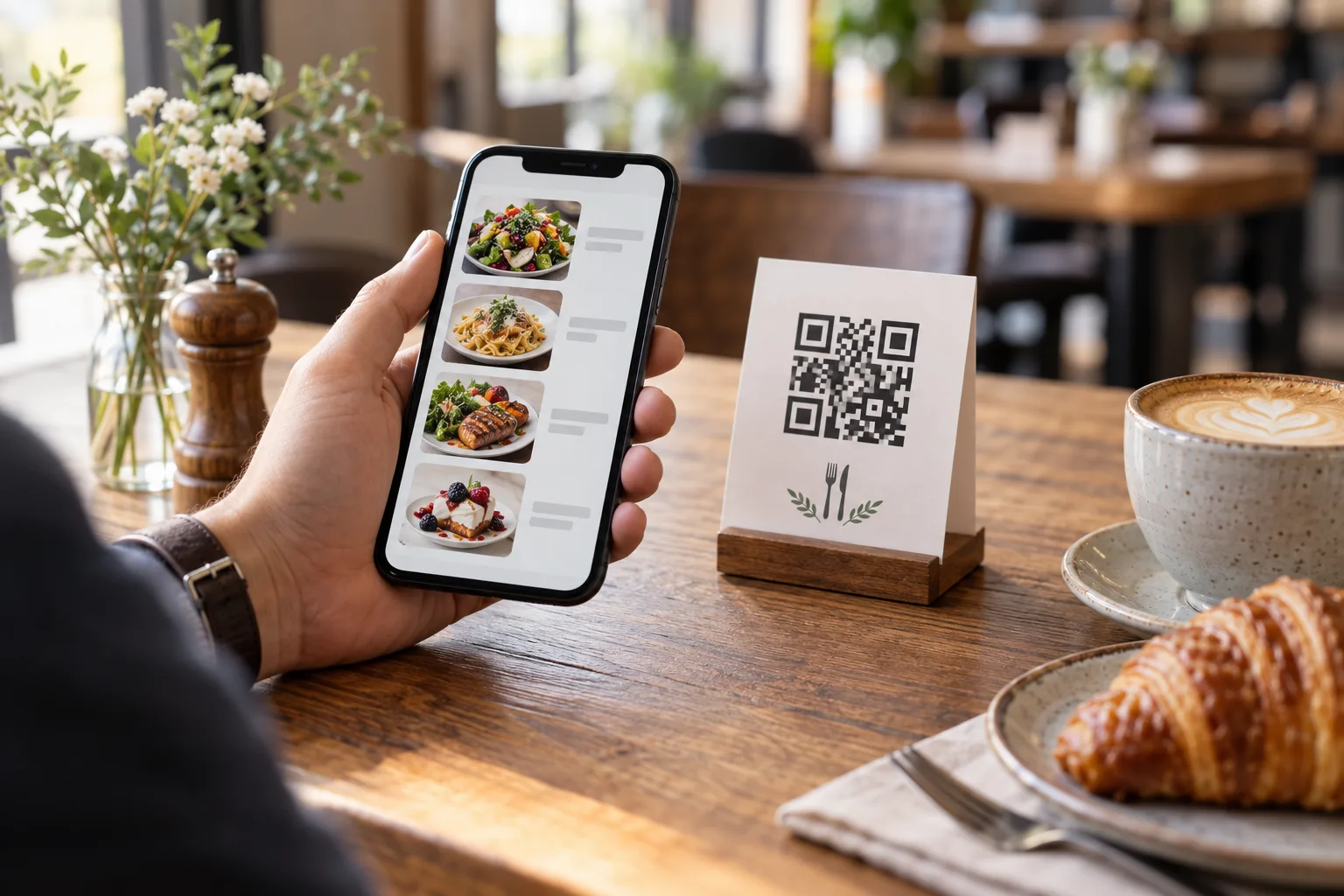
If you are considering the switch from paper to digital, the transition does not need to be all-or-nothing. Many restaurants successfully run a hybrid approach: QR code menus as the default with a small stock of printed menus available on request. This accommodates every guest's preference while capturing the cost savings and operational benefits of digital for the majority of tables.
The key to a smooth transition is choosing a digital menu platform that is genuinely easy to update. If changing a price or adding an item requires technical skills or a lengthy process, you will end up with a digital menu that is just as outdated as the paper one it replaced. The best platforms let any staff member make changes in minutes through a simple interface.
Looking Ahead
The trajectory is clear. Digital menus are becoming the default across every restaurant segment, from fast casual to fine dining. The economics are compelling, the customer preference is shifting, and the operational advantages are too significant to ignore. Restaurants that invest in a quality digital menu experience now will be better positioned as the industry continues to digitize ordering, payment, and customer engagement.
The question is no longer whether to adopt digital menus but how to implement them well. Focus on speed, design quality, ease of updates, and customer experience, and the transition will pay for itself many times over.